
Call us now :07971549684
 Send Inquiry
 Send Inquiry
Envelop Flanges
MOQ : 1 Unit
Envelop Flanges Specification
- Product Type
- Envelop Flanges
- Material
- PTFE (Polytetrafluoroethylene) + SS (Stainless Steel)
- Automation
- Manual
- Function
- Pipe connection and sealing
- Capacity
- Varies as per size (customizable)
- Temperature
- -200C to 250C
- Dimension (L*W*H)
- As per ANSI/ASME/DIN standards
- Weight
- Depends on flange size and material
- Color
- White (PTFE face) / Metallic (Steel body)
- Connection Type
- Bolted
- Application
- For highly corrosive fluid transfer lines
- Finish
- Mirror finished PTFE envelope, smooth steel body
- Leakage Test
- Hydrostatic and pneumatic as per standard
- Manufacturing Technique
- Forged / Machined
- Corrosion Resistance
- Excellent against aggressive chemicals
- Standard
- ANSI B16.5 / DIN / JIS / BS
- Gasket Compatibility
- Suitable for PTFE enveloped gaskets
- Applicable Industries
- Chemical, Petrochemical, Pharmaceutical, Food Processing, Water Treatment
- Pressure Rating
- Up to 100 bar
- Face Type
- Raised Face (RF) / Flat Face (FF)
- ANSI Class Range
- 150, 300, 600, 900, 1500 lbs
Envelop Flanges Trade Information
- Minimum Order Quantity
- 1 Unit
- Payment Terms
- Cheque
- Supply Ability
- 3 Units Per Month
- Delivery Time
- 2 Days
- Sample Available
- Yes
- Packaging Details
- Wooden Box Packaging.
- Main Domestic Market
- All India
- Certifications
- ISO 9001:2015
About Envelop Flanges
As a customer centric manufacturer and exporter, we are offering premium quality Envelop Flanges. Made of good quality PTFE material, these Envelop Flanges are used as suitable sealing accessories for tire repairing machinery. Available in 22.5, 20, 16, 14, 13 and 12 size options, these are hydraulically pressed and are light in weight. High temperature proof design, unique mechanical properties, thermal resistance capacity, low flammability, low friction co efficiency, chemical resistance capacity, high insulation level and non sticky surface are some special features of these Envelop Flanges.
- Hydraulically prssed & light weight.
- Sizes available: 22.5, 20, 16, 14, 13, 12
Technical Specifications
| Product Code | KMT-007 |
| Brand | KMT |
| Material | PTFE |
| Shape | Round |
| Thickness | 3 mm |
| Size | 22.5,20,16,14,13,12 inch |
Exceptional Corrosion Resistance
The PTFE envelope combined with a stainless steel core provides unrivalled protection against aggressive chemicals. This design ensures longevity and reliability even when exposed to harsh substances, making the flanges ideal for demanding process environments such as chemical and pharmaceutical plants.
Precision Sealing and Safety
Engineered for tight sealing, these flanges undergo hydrostatic and pneumatic leakage tests as per industry standards. The combination of PTFE and steel ensures a smooth, mirror-like finish for the sealing surface, reducing the risk of leakage and promoting operational safety.
Versatile Compatibility
Envelop Flanges are available in multiple standards, including ANSI B16.5, DIN, JIS, and BS. Users can select from Raised Face (RF) or Flat Face (FF) options, and the design supports use with PTFE enveloped gaskets, enhancing chemical resistance and sealing integrity across various installation requirements.
FAQs of Envelop Flanges:
Q: How are Envelop Flanges installed in corrosive fluid transfer applications?
A: These flanges are installed by bolting them to pipe ends, using suitable PTFE enveloped gaskets to ensure a leak-proof connection. The bolted setup is manual and strictly follows standardized dimensions to facilitate compatibility and ease of installation.Q: What are the major benefits of using PTFE stainless steel envelop flanges in the chemical and pharmaceutical industry?
A: The primary benefits include superb resistance to aggressive chemicals, excellent sealing performance, and extended operational life. Their compatibility with PTFE gaskets and mirror-finished sealing surfaces make them particularly effective for handling highly corrosive fluids in sensitive environments.Q: When should I choose a raised face (RF) versus a flat face (FF) envelop flange?
A: Raised face (RF) flanges are preferred for applications requiring enhanced sealing under higher pressure, while flat face (FF) options are more suitable where pipelines and equipment have flat surfaces or lower pressure requirements. Selection depends on the systems operational pressure and alignment needs.Q: Where are these envelop flanges commonly used in industry?
A: Envelop flanges are widely utilized in chemical, petrochemical, pharmaceutical, food processing, and water treatment sectors, particularly for transfer lines and equipment dealing with corrosive or hazardous fluids.Q: What manufacturing process is used for these flanges and why?
A: These flanges are manufactured using forging and machining techniques. Forging enhances the mechanical strength, while machining ensures precision in dimensions and a smooth, mirror-finished PTFE envelope for optimal sealing and corrosion resistance.Q: How are these flanges tested for leakage and quality assurance?
A: Flanges undergo both hydrostatic and pneumatic leakage tests, in accordance with standard procedures, to verify sealing effectiveness and durability before dispatch, ensuring compliance with industry requirements.Q: What is the pressure and temperature range suitable for PTFE envelop flanges?
A: Envelop flanges can operate safely at pressures up to 100 bar and within a wide temperature spectrum from -200C to 250C, making them suitable for extreme processing environments.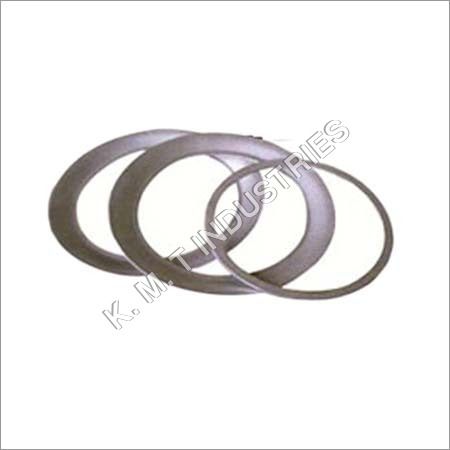
Tell us about your requirement

Price:
Quantity
Select Unit
- 50
- 100
- 200
- 250
- 500
- 1000+
Additional detail
Mobile number
Email


 Send Inquiry
Our Products
- Tyre Curing Chamber
- Tyre Rasper
- Tyre Buffing Machine
- Mobile Tyre Lifts
- Tyre Builders
- Tyre Curing Rims
- Tyre Retreading Machine
- Inspection Spreader
- Warming Tray
- Tyre Repair Spreaders
- Envelop Flanges
- Tyre Skiving Motor
- Air Compressor
- Electric Chamber
- Tire Changer Machine
- Electric Curing Chamber
- Track Building Machines
- Tyre Repair Kit
- Flexible Shaft Machine

Patiala Road, Narwana, Near Govt. ITI and Rajiv Gandhi Govt. Polytechnic,Narwana - 126116, Haryana, India

Mr. Mahavir
(Proprietor)
Mobile :07971549684
Mr. Dharampal Singh
Mobile :07971549684
 Send Inquiry
 Send SMS
Developed and Managed by Infocom Network Private Limited.
